Public education • clinical research
Sources & research
This page is a starting point for people who want to understand the child-development and systems-design stakes behind time, separation, stability, and procedural delay.
We are not asking anyone to “take our word for it.” We are asking Maine to treat family court process like a high-consequence system: measure it, publish it, and improve it — because children only get one childhood.
How to use this list
For the public
- Skim the “Why time matters” section first.
- Then read “Separation / disruption” and “Contact & reunification.”
- Use the study abstracts — no medical background required.
For officials & practitioners
- Use these sources to inform measurable timelines and reporting.
- Prioritize reforms that reduce preventable delay and instability.
- Focus on process quality (fairness, clarity, predictability) — not outcomes.
Why time matters for children
A core systems point: in high-consequence systems, delay is not neutral. In child development, instability and prolonged uncertainty can compound stress and disrupt attachment — especially in young children.
Adverse Childhood Experiences (ACEs)
ACEs are not “a slogan.” They are a research-backed framework for how early adversity correlates with later life outcomes.
- Felitti et al. — ACE Study (Am J Prev Med; PubMed)
- CDC overview of the ACE study
- JAMA Pediatrics — ACE prevalence (BRFSS multi‑state)
Why this matters for family systems: when a system tolerates instability and delay, it can unintentionally create ACE-like conditions (chronic stress, disrupted relationships, instability) even when that was not anyone’s intent.
Separation, disruption, and attachment
Not all separations are avoidable, and safety matters. But avoidable separation and prolonged disruption should be treated as a measurable risk — and minimized through better process design.
Separation / loss in young children
Study notes associations with trauma-related symptoms and impairment even after controlling for other adversities.
Attachment-disrupting ACEs
Includes “forced separation from a parent/caregiver” as a predictor in adjusted models.
Parent contact, reunification, and mental health
In many cases, the system goal is stability and permanency — which depends on timely hearings, clear milestones, and consistent contact where appropriate.
Contact frequency & outcomes
This does not replace case-by-case safety decisions; it supports the systems point: contact and time are measurable operational levers with real outcomes.
Broader prevalence & meta-analyses
ACE prevalence in child samples
ACE outcomes meta-analysis
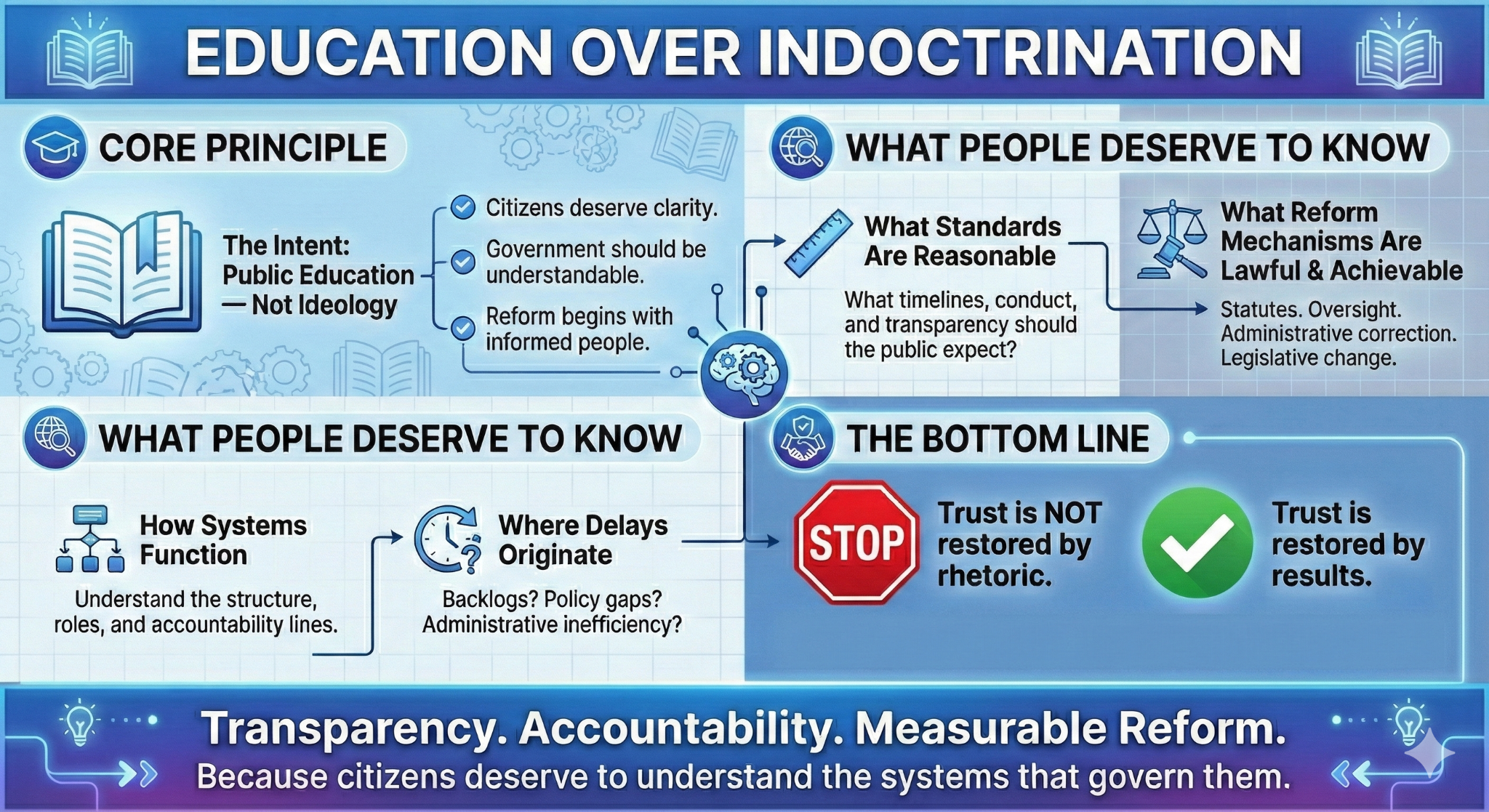
Education over indoctrination
This movement is grounded in public literacy — understanding how systems function, where delays originate, what standards are reasonable, and which reform mechanisms are lawful and achievable.
Want to suggest additional research? Send it via Connect and include the PubMed link when possible.